Poms in the alopecia X survey
211in the Netherlands and Belgium
Woolly-coated dogs and males were at higher risk than shiny-coated dogs and females.[4]

Knees, teeth, the windpipe and the coat: what to ask about both parents, and what to watch for at home.
Pomeranians often live 12 to 16 years. Their common problems are the problems of a very small dog: kneecaps that slip, crowded teeth, a narrow windpipe and, in very young puppies, low blood sugar, plus a coat condition the breed is known for. Screening the parents and choosing normal-sized parents lowers the risks. KUSA tells buyers to ask for copies of health tests before paying.[1][2][3]
Woolly-coated dogs and males were at higher risk than shiny-coated dogs and females.[4]
In a small 2026 study; the link is not yet explained.[5]
The Pomeranian was among the four most common breeds in the series.[6]
From a 2025 survey in the Netherlands and Belgium, a small 2026 study and a 2024 series of small-breed dogs with tracheal collapse. These are early findings; ask your vet.
Ask for copies before any deposit. Each report should carry the vet's name, the date and the dog's microchip or KUSA number, matching the parent's KUSA certificate.
On the mother and the father:

In a luxating patella the kneecap slips out of its groove, giving a skip or a few steps on three legs. Vets grade it from I, where it can be pushed out but returns, to IV, where it stays out; higher grades often need surgery.
It is listed among the Pomeranian's common problems, and VCA notes that toy and small breeds carry a genetic predisposition. Ask for both parents' knee grades in writing, and see a vet if your dog skips or holds up a back leg.[9][2]

Tracheal collapse is a weakened windpipe that causes a honking cough and breathing trouble, and collars and lead-pulling can make it worse. In a 2024 series of 110 small-breed dogs with the condition, the Pomeranian was among the four most common breeds. Walk your Pom on a harness, and have any honking cough checked.
Dental disease is common in Pomeranians: small mouths crowd the teeth and plaque builds fast. Regular brushing at home may help prevent it, and cleanings by your vet over the years are part of keeping a Pom healthy.[2][6][1]
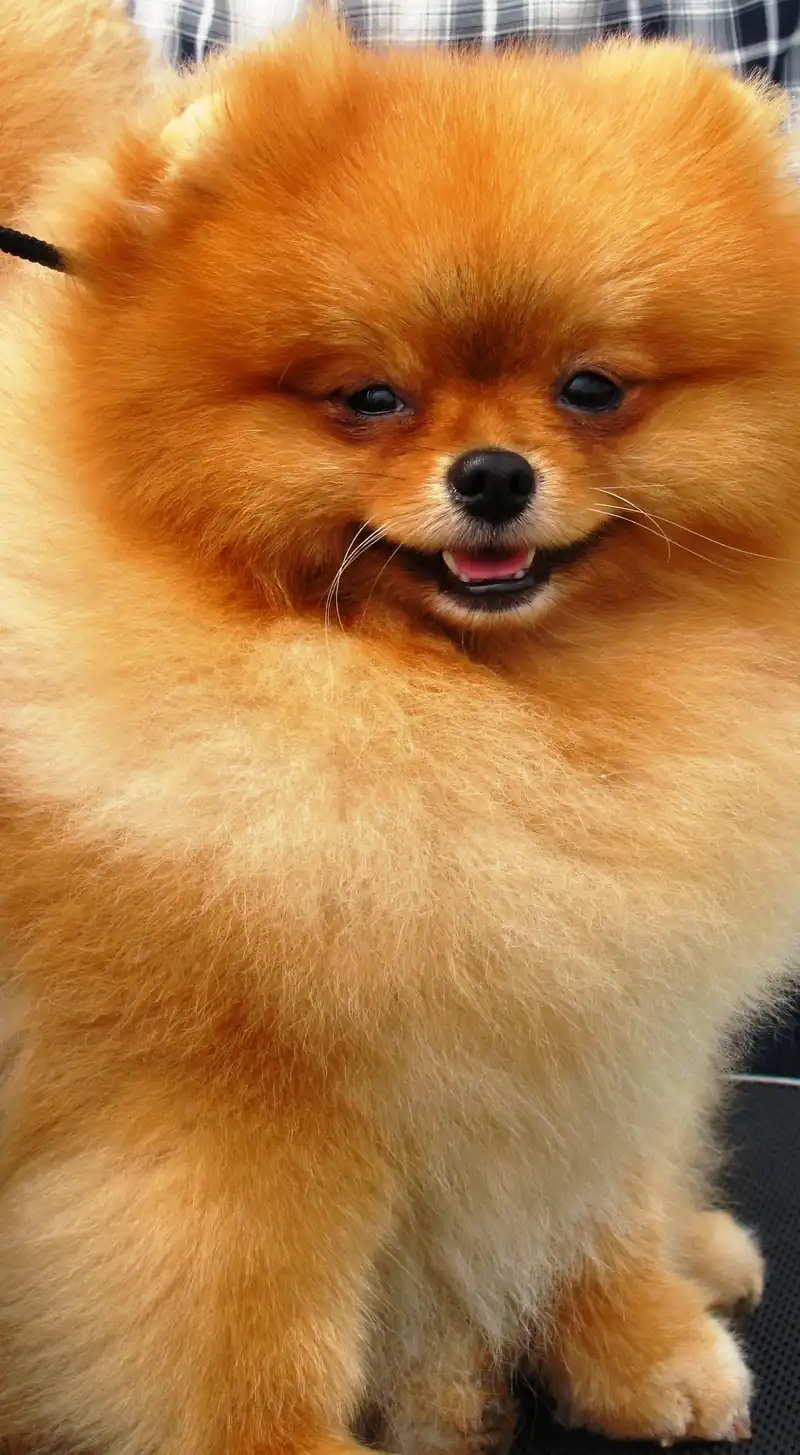
Alopecia X causes gradual, painless coat loss with darkening skin, usually from near the tail and back legs; its cause is unknown, and a vet will first rule out thyroid, adrenal and other causes. It mainly affects looks, but bare skin needs protection from sun and injury.
Very small puppies, especially under three months, are at serious risk of low blood sugar, which can cause weakness and seizures; they need small meals often. Cataracts and extra eyelashes rubbing the eye are also listed, and the Royal Kennel Club recommends eye testing for breeding dogs.[2][10][1][7]
At grade I the kneecap can be pushed out but slips back; at grade IV it stays out. Higher grades often need surgery.[9]
No, it is painless and mainly affects looks, but see a vet to rule out other causes of hair loss, and protect bare skin from the sun.[2][10]
Very small puppies are at risk of low blood sugar, which can cause weakness and seizures. Small, frequent meals help prevent it.[1]
No. It shows today's health. The parents' knees, eyes, weights and coats tell you more about what may lie ahead.[3][9]
No one can do that. A careful breeder checks the parents, keeps them at a normal weight, shares the results and stays in touch.
Written from the sources above for Premier Pets. Last reviewed 27 November 2026. Spot something out of date? Email sales@premierpets.co.za.